





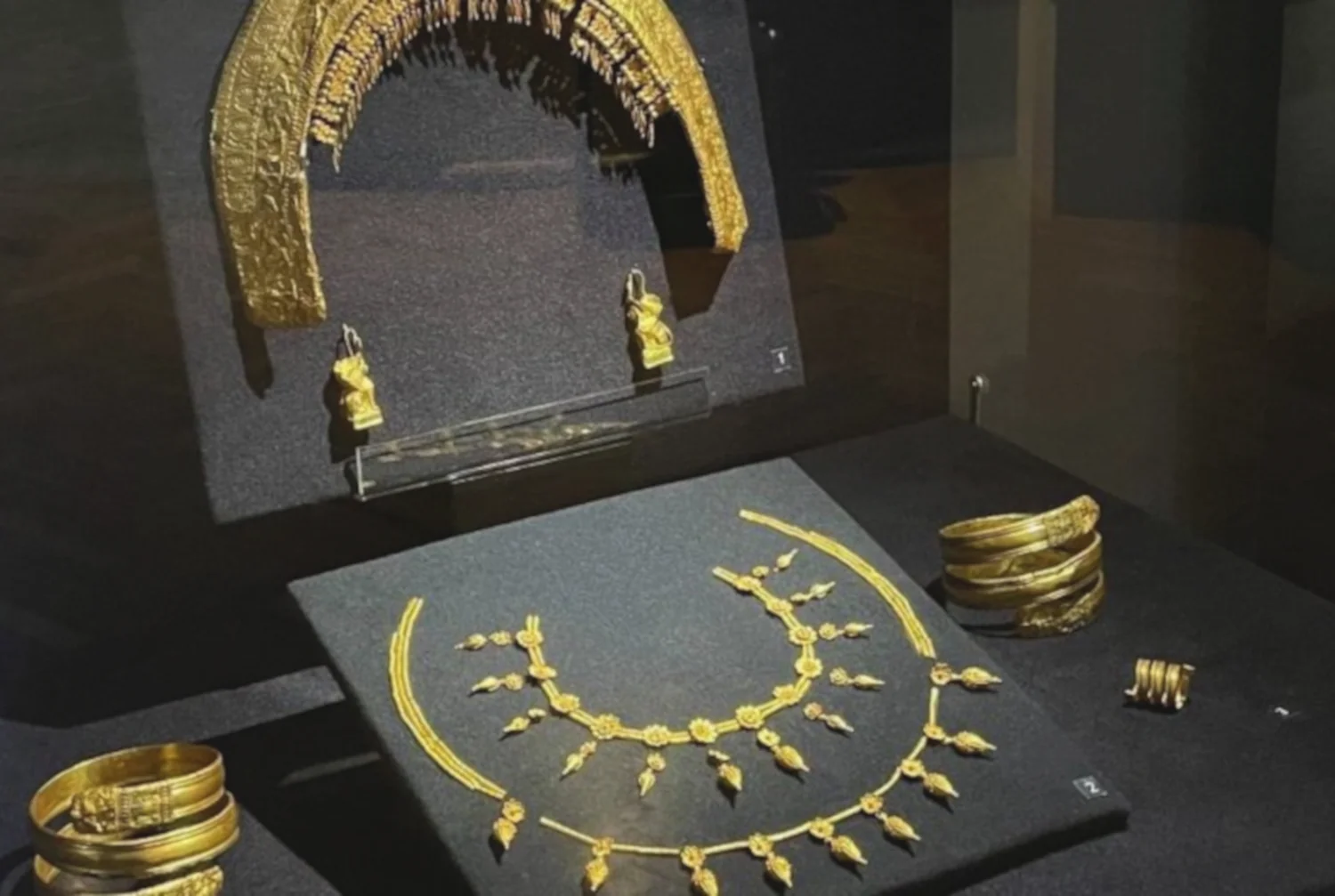
By the end of 2026, russia plans to hold 40 more exhibitions about the “Scythian gold.” At these events, russian representatives are spreading propaganda claiming that russia has the right to own it. This was reported by suspilne.media, citing russian media.
“I would especially like to highlight the contribution of our colleagues from the russian Military Historical Society, who prepared an excellent, informative, and highly expressive exhibition dedicated to aspects of the Crimean collection. The museum community has also not remained on the sidelines. At present, around 40 russian museums have expressed their readiness to prepare, as soon as possible and on the basis of the exhibition materials, their own displays dedicated to the stolen artifacts and efforts to have them returned,” said Ivan Likoshin, director of the Department of Museums and Support for Circus Arts at russia’s Ministry of Culture. He added that, approximately, a significant portion of these projects would be presented to the general public throughout russia by the end of the year.Previously, similar exhibitions were held in moscow, Washington, Mexico, Poland, and the Netherlands.
The collection consists of more than 580 archaeological artifacts, including weapons, armor, jewelry, household objects, and gold items dating from the 1st century BCE to the 3rd century CE. Before the beginning of russia’s occupation of Crimea, these objects were held by four Ukrainian museums in Crimea. In 2013, the collection was loaned for an exhibition at the Allard Pierson Museum in Amsterdam. After russia occupied Crimea in 2014, the artifacts remained in the Netherlands. In 2023, the Supreme Court of the Netherlands issued a final ruling ordering that the collection be handed over to Ukraine. The court confirmed that it belonged to Ukraine’s state Museum Fund.
“The aggressor state is attempting to present Ukrainian artifacts as ‘russian heritage’ and to create a distorted perception of Crimea’s history abroad. Similar russian photo exhibitions are also being held in other countries, including Mexico, Poland, and the Netherlands. Thus, russia’s claims about ‘russian treasures’ correspond neither to the history of the collection’s origins nor to international court decisions. Ukrainian museums are the lawful owners of these cultural assets. The russian embassy described the Dutch decision as allegedly ‘politicizing cultural heritage’ and stated that moscow would continue seeking the return of the collection,” Ukraine’s authorities said.The Office of the President of Ukraine’s Representative in the Autonomous Republic of Crimea appealed to Ukraine’s Ministry of Foreign Affairs regarding russia’s organization of such exhibitions abroad and the need to respond to the spread of russian propaganda narratives.
“We urge people not to become part of this information campaign: boycott such exhibitions, do not provide them with venues, and do not help spread them. Crimea’s cultural heritage is Ukrainian, and russia cannot use it to justify its occupation or appropriate Ukrainian history,” the Office of the Representative said.
The issue was also discussed during a meeting with representatives of Finland’s cultural institutions.
“During the meeting, we discussed the situation in temporarily occupied Crimea, systematic human rights violations, and persecution. Particular attention was paid to russian propaganda exhibitions about the so-called ‘Crimean gold,’ the use of Crimea’s cultural heritage in russian investment programs, and the spread of narratives aimed at appropriating the peninsula’s cultural heritage and displacing Ukrainian identity,” the Office of the Representative reported.