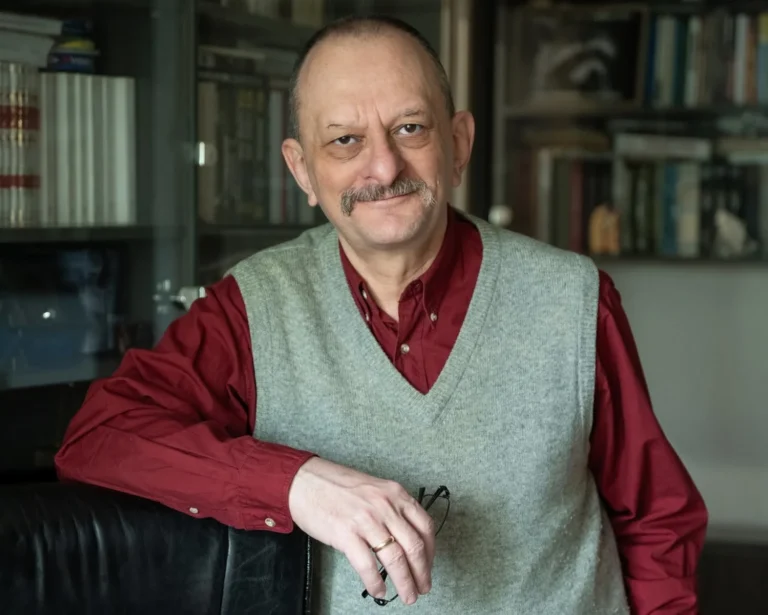
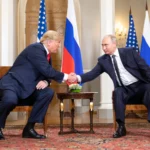







Ratcliffe’s trip to moscow has still not been commented on by only the lazy. I am that lazy one. I am commenting in bullet points. Oleksiy Panych, PhD, Senior Research Fellow at the Ukrainian Humanities Publishing House ‘Dukh i Litera,’ writes.

- Americans expect rational decisions from putin.
- But it is not certain that they take into account all the parameters within which putin makes rational decisions.
- The thing is, for putin, stopping the current war is no less difficult — in fact, at this point, even more difficult — than continuing it.
- And the issue is not just that (a) “russians need to be given at least some kind of victory” and (b) “something will have to be done with that horde that returns from the front.” Americans understand this; however, all this is painful but not critical.
- russia’s fundamental problem is that it cannot NOT strive for territorial expansion. If it stops, as it did under Yeltsin, one of the “federal subjects” will inevitably and quite quickly want to leave, to go “free.” This problem is kept in a latent state only as long as russian elites receive a doping dose of “new territorial gains” from time to time. No gains — and russian regions return to the question: “What, exactly, are we together for?” After all, other than expansion, russia’s “resource-based economy,” founded on the extremely uneven distribution of superprofits from oil and gas sales, fundamentally does not envisage and cannot offer russians any other positive common goal.
- On the other hand, in the 21st century, this expansion was bound to hit a wall sooner or later. As it happened, that wall turned out to be Ukraine.
- This means that it is not Ukraine but russia itself that is in a strategic dead end today. In chess terms, putin is in zugzwang. In roulette terms, all he has left is to bet on “zero” and hope it comes up three times in a row. But, unlike that lady in Dostoevsky, in the event of an immediate end to the game, he quickly loses everything, so ending the game is not an option for him.
- The only thing Ratcliffe could do was to push putin into an even narrower corridor of options, by spelling out for him the risks of certain potential scenarios for shifting expansion to other territorial directions.
- And the practical conclusion for us: ending the war this year is possible only if russia starts to collapse this year — primarily financially and economically, and also, possibly, due to mass social unrest from a deteriorating standard of living. But the probability of this is very low. Therefore, we must hold on and endure — because any concession to the russian Federation is guaranteed to bring far greater disasters (and more deaths) than everything we have and will have in the future.