



|
Getting your Trinity Audio player ready... |


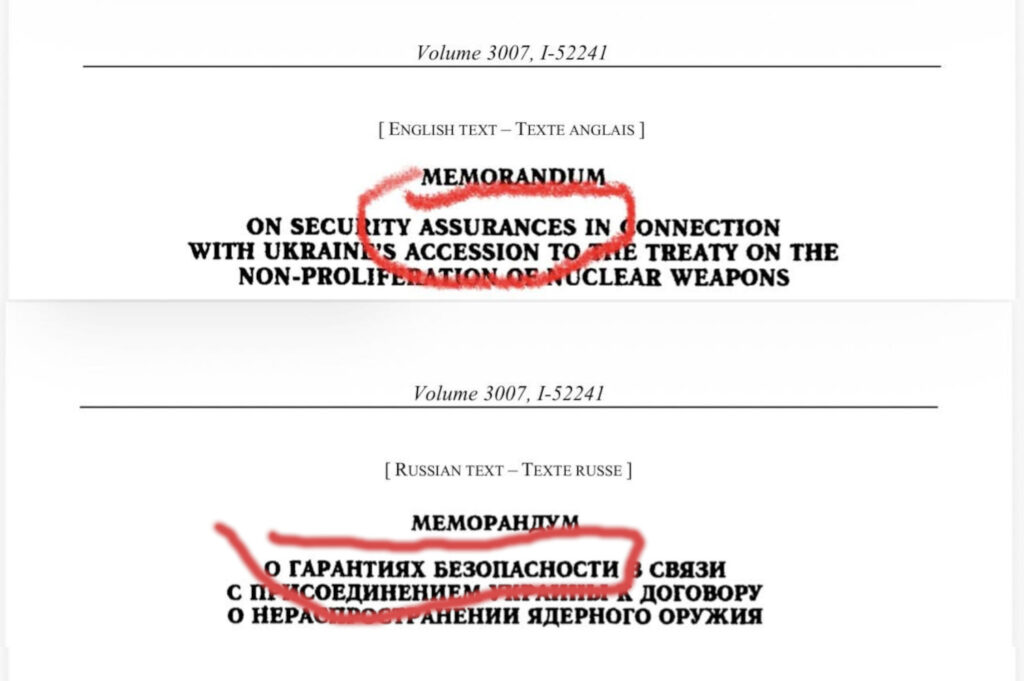
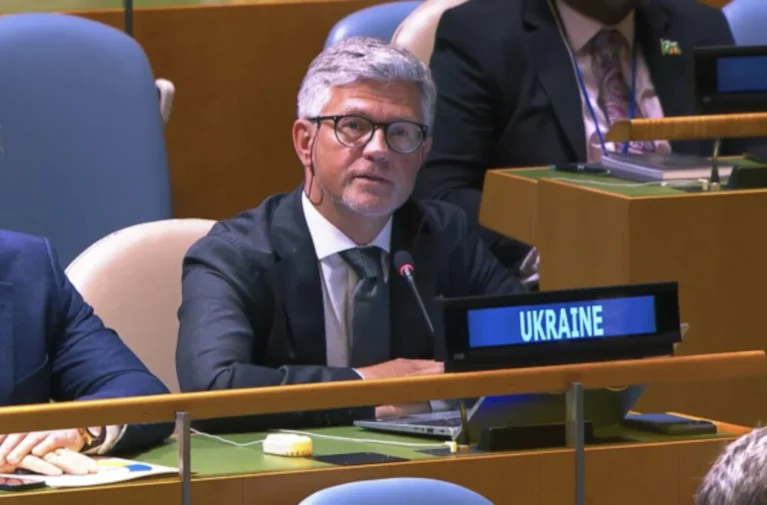
The English version of the Budapest Memorandum differs from the Ukrainian and russian versions. In the English version, Ukraine was provided “assurances,” while in the Ukrainian and russian versions, it was provided “guarantees.” The difference between assurances and guarantees remains critically important in legal, political, and professional spheres. Although both concepts imply a promise, a guarantee is usually a stronger, legally binding commitment, while assurances often relate to providing confidence or a “softer” political context, Sergiy Kyslytsya, former Permanent Representative of Ukraine to the UN writes.

I am convinced that the Ukrainian version of the translation is not accidental. It was deliberately chosen by moscow and probably in Kyiv also (albeit for slightly different reasons) to create an impression, primarily among Ukrainians, of the strength of the memorandum and the commitments made by russia, the United Kingdom, and the United States. The latter two English-speaking countries were not particularly concerned with the Ukrainian or russian versions. This is understandable. The same applies to the French translations, as they were irrelevant to London, Washington, and Paris itself. Contrary to another “Budapest myth,” France was not and is not a party to the Budapest Memorandum. The document was signed in Ukrainian, English, and russian.
In his letter to Clinton dated November 2, 1994, Yeltsin writes about providing security “guarantees.”
This linguistic balancing act was not “lost in translation” — assurances vs. guarantees was the subject of a correspondence between Yeltsin and Clinton in the run-up to the Budapest summit. The correspondence emphasizes the difference between “guarantees,” which moscow preferred, and “assurances,” which the US insisted on and which were ultimately provided to Ukraine in exchange for renouncing the world’s third-largest nuclear arsenal.
One would have to be a complete fool to think that moscow was genuinely concerned about the strength and effectiveness of Ukraine’s security guarantees — all subsequent events, including aggression and occupation, confirm this. moscow needed to disarm and weaken Ukraine and make Ukrainians belive in moscow’s “guarantees.” Washington, in turn, sought to make Ukraine non-nuclear.
The events of 1994 and the Budapest Memorandum should be remembered. But it is even more important to know and tell the truth. Not to live by myths and spread myths—political, linguistic, etc. Especially now, when it comes to Ukraine’s security guarantees. Their legal force and effectiveness.
The current negotiations are indeed about “guarantees.” Not only are they discussed, but they are also written into draft documents — specifically, security “guarantees” that must be ratified by the parties.
Ukraine has learned from the lessons of the past; we do not need political “assurances” or “guarantees” from moscow.
P.S. And the “icing on the cake” is the fact that it was only on October 2, 2014, that the Budapest Memorandum was officially registered with the UN Secretariat. By Ukraine. The other signatories did not bother with this. And why would they need it? Should I have started with this?